Málaga · Andalucía
Antequera
- Province
- Málaga
- Status
- Conjunto Histórico
- Population
- 41,849
- Elevation
- 575 m
Antequera is a heritage town in the province of Málaga, Andalucía, Spain. It is designated a Conjunto Histórico (Spain's national heritage designation for historic ensembles). Population 41,849 (2025), elevation 575m.
A crossroads city in Málaga province, Antequera holds Spain's finest collection of megalithic tombs, a Moorish alcazaba, and more than fifty historic religious and civic buildings spread across a skyline shaped by 4,000 years of continuous occupation.
Key facts
- Province
- Málaga
- Heritage status
- Conjunto Histórico
- Population
- 41,849 (2025)
- Elevation
- 575 m
History of Antequera
Antequera's roots go back at least 2,000 to 4,000 years, when the megalithic tombs now known as the Menga, Viera and El Romeral dolmens were built, considered the finest group of their kind in Spain. The Roman town of Anticaria followed, becoming a significant commercial centre, particularly for olive oil production. Physical traces of that period survive in excavated Roman baths on the city's southwest edge and in the first-century AD sculpture known as the Efebo de Antequera.
Arab forces entered the city after a treaty with the Visigothic ruler Theodimir, and under Moorish rule it became Medina Antakira, fortified with an alcazaba and defensive walls. Its position on the frontier between Christian and Muslim territories made it strategically vital, and its eventual conquest by the regent Fernando, who became known to history as "el de Antequera", was considered important enough for him to lead it personally. After the fall of Granada in 1492, the city expanded beyond its walls.
The 16th and 17th centuries brought its greatest growth: religious orders built convents, churches and chapels in large numbers, the nobility commissioned palaces, and Antequera became one of Andalucía's most important commercial cities.
Heritage & Monuments
Antequera has over fifty historic religious and civil buildings. The Real Colegiata de Santa María la Mayor, a National Monument, was built between 1514 and 1550 and is considered the first church in Andalucía conceived in the Renaissance style. It combines Ionic columns and a Mudéjar coffered ceiling with a Gothic-Mudéjar vault over the high altar; its stone façade was built using blocks from the Roman site of Singilia Barba. The second collegiate church, San Sebastián, dates from 1548 and mixes Renaissance and Plateresque on its façade, Baroque in its bell tower, and Neoclassical inside.
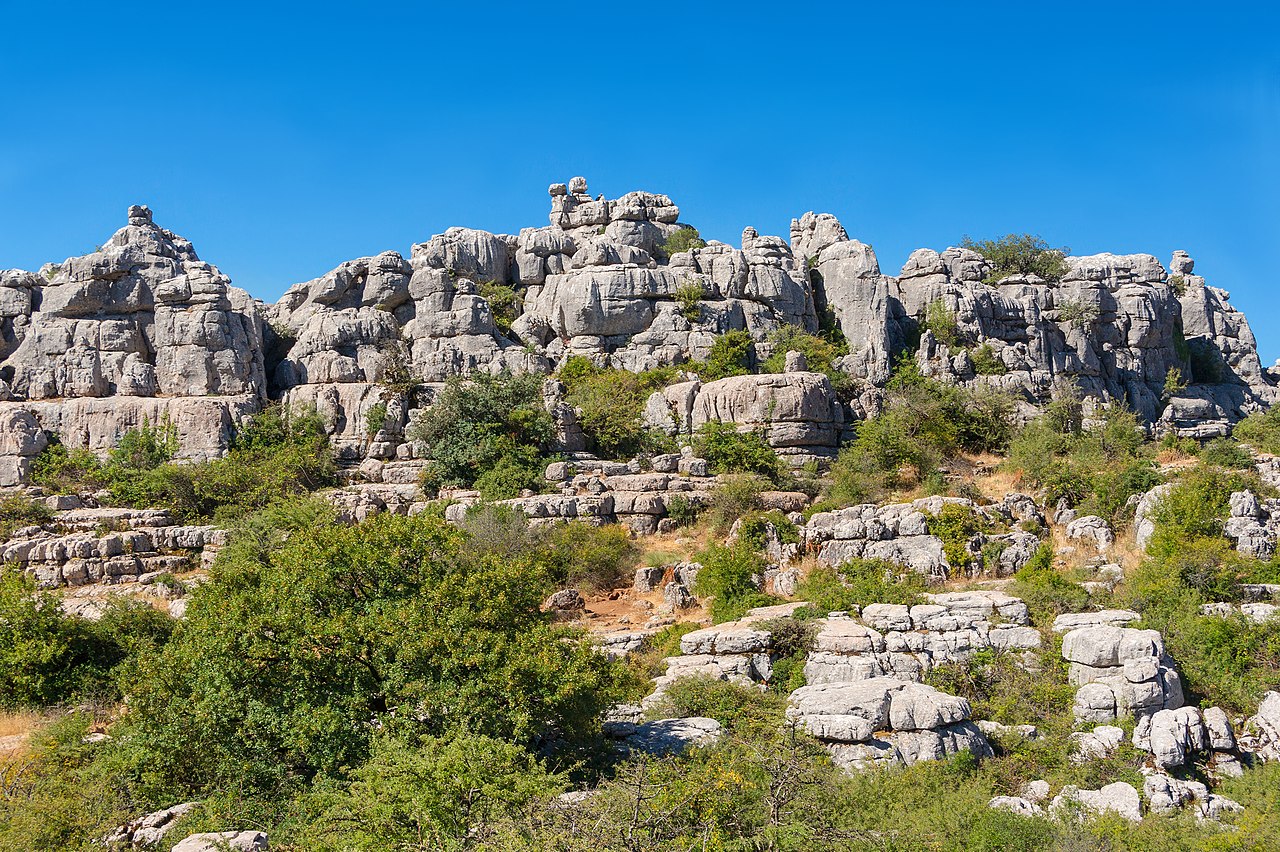
Three of the city's historic gateways survive: the Moorish horseshoe-arched Puerta de Málaga, set into the alcazaba wall; the Puerta de Granada, built in 1748 by master builder Martín de Bogas; and the Puerta de Estepa, destroyed in 1931 and rebuilt in 1998 in brick and red limestone from El Torcal.
The dolmens of Menga, Viera and El Romeral are the most significant archaeological remains. The Dolmen de Menga, at 27.5 metres in total length, is regarded as one of the great achievements of prehistoric lintel architecture in Europe.
Practical Travel Info
Casado buses run regularly from Málaga, taking around 55 minutes. The AVE high-speed train takes only 20 minutes but the station sits slightly outside the town centre. The town itself is walkable, with taxis available; for sites beyond the centre, renting a car is advisable.
Mobile coverage as of December 2024 includes 4G from MasMovil, Orange and Vodafone, and 5G from Movistar. Antequera's food is well regarded across Andalucía, try porra antequerana, a thick tomato-based dish, with mollete antequerano, a local bread. The Parador offers a good-value midday Menú del Día.
Where to eat in Antequera
Ratings & restaurant data from Google.
Regional food & drink
Andalucía is known for Gazpacho, Salmorejo and Pescaíto frito, among 5 regional specialities.
Watch: Sherry (Jerez)
Fiestas in Antequera
Dates recur annually but can shift by a few days. Confirm with the ayuntamiento before planning a trip around one.
- Nuestra Señora de los Remedios8 September
- Santa Eufemia16 September
Gallery
Location
Quick answers
Is Antequera worth visiting?▾
A crossroads city in Málaga province, Antequera holds Spain's finest collection of megalithic tombs, a Moorish alcazaba, and more than fifty historic religious and civic buildings spread across a skyline shaped by 4,000 years of continuous occupation.
Why is Antequera a heritage town?▾
Antequera is officially designated a Conjunto Histórico, Spain's national heritage designation for historic ensembles.
What is the traditional food in Andalucía?▾
Andalucía is known for Gazpacho, Salmorejo, Pescaíto frito and Jamón ibérico. You'll find these regional specialities in and around Antequera.
How big is Antequera?▾
Antequera has a population of about 41,849 (2025), and sits at 575 m above sea level.
What is there to see in Antequera?▾
Antequera has over fifty historic religious and civil buildings. The Real Colegiata de Santa María la Mayor, a National Monument, was built between 1514 and 1550 and is considered the first church in Andalucía conceived in the Renaissance style.
What is the history of Antequera?▾
Antequera's roots go back at least 2,000 to 4,000 years, when the megalithic tombs now known as the Menga, Viera and El Romeral dolmens were built, considered the finest group of their kind in Spain. The Roman town of Anticaria followed, becoming a significant commercial centre, particularly for olive oil production.
Nearby heritage towns
A Málaga hill town where Moorish castle walls, a perfectly preserved octagonal Baroque plaza, and centuries of layered history make it one of inland Andalucía's most architecturally distinctive stops.
A small Málaga hill town built around sulphurous springs with legendary healing powers, its neoclassical spa, rock-cut bullring, and Moorish-revival town hall drawing curious visitors to the hills of Andalucía.
A hilltop town in Sevilla province where a walled Alcázar, a 40-metre Baroque tower, and a string of convents and churches crown the high ground above an old Roman road.
A city in Córdoba province where Julius Caesar once fought, where Jews built a medieval quarter known as the Pearl of Sepharad, and where Granada's last emir ended up imprisoned in a castle tower.
A hilltop town above the Málaga coast where a Phoenician sanctuary, a cave hermitage carved by hand, and Roman trade roads all converge in the same small stretch of whitewashed streets.
A Moorish hilltop fortress, Gothic-mudéjar churches rising from converted mosques, and a whitewashed old town spreading across two facing hills above the Axarquía coast of Málaga.
Visiting from a nearby city?
Antequera makes a great day trip from:
Last updated 19 June 2026.