Heritage towns in Castilla y León (Castile and León)
125 towns across 9 provinces.
Traditional food & drink in Castilla y León →Ávila
View province →
A royal town on the Castilian plain where Isabel la Católica spent her youth, its pentagonal castle rising above the meeting of the Adaja and Arevalillo rivers and its mudéjar monuments among the finest in the region.
 Most Beautiful Villages
A fortified episcopal stronghold in the mountains of Ávila, where a ruined castle, medieval walls, and a Gothic collegiate church preserve the political dramas of 15th-century Castile.

A village in the Ávila hills whose whitewashed facades, distinctive chimneys, and balconied houses survive so intact that the Spanish state declared the whole ensemble a protected historic monument.

Birthplace of the fearsome Grand Duke of Alba and former summer seat of one of Spain's greatest noble dynasties, this walled Castilian town in Ávila province holds a French baroque palace, a medieval church-fortress, and a porticoed main square that has hosted everything from bullfights to Goya.

A castle, a Romanesque bridge, and medieval walls mark this Ávilan town on the Camino, once home to figures who helped shape Spain's conquest of the Americas.

Ávila's complete medieval walls, among the best preserved in Europe, still encircle a cathedral that doubles as a military tower, in the high plateau of Castilla y León.
Burgos
View province → Most Beautiful Villages
A long, thin town strung along a hillside under a ruined castle, and one of the quieter, more atmospheric stops on the Camino Francés.
 Most Beautiful Villages
Known as the cradle of Castile, this Arlanza-river village guards a rare 10th-century defensive tower and a timber-framed old town tied to Count Fernán González.

A Benedictine monastery town famed for its two-storey Romanesque cloister and the Gregorian chant of its monks, set in the quiet hills south of Burgos.
 Most Beautiful Villages
The Villa Ducal de Lerma: a planned Baroque town crowning a ridge above the Arlanza, built around one of Spain's grandest ducal palaces and arcaded plazas.

A hilltop castle keep watches over a near-perfect plaza of timbered houses and a Renaissance palace, deep in Burgos's Ribera del Duero wine country.
 Most Beautiful Villages
Perched on a rock above the Ebro river in Burgos province, Frías crowns its crag with a medieval castle, two surviving town gates, and streets of timber-framed houses that still hang from the cliff face.

The administrative capital of the ancient Siete Merindades of Castilla la Vieja, Villarcayo holds Gothic tombs, a tent-shaped modernist church, and the second most important historical archive in the province of Burgos.

A small Burgos town that once sat on the front line between Franco's Nationalist territory and the Republican regions of Cantabria and the Basque Country.

A medieval town in Burgos whose grid of streets, laid out by a Portuguese princess in 1305, became the model for the Spanish grid cities of the Americas, and whose monastery church holds what locals call the Escorial of altarpieces.

An enclave of Burgos province surrounded entirely by the Basque Country, Condado de Treviño carries a territorial oddity rooted in medieval law, with Romanesque hermitages, cave dwellings, and ancient oak forests scattered across its comarca.

A mountain town in northern Burgos with more listed monuments than anywhere else in the province outside the capital, towers, palaces, and fortified houses rising above the river Trueba.

Sitting on a ridge between two river valleys in the Ribera del Duero, this Burgos town of under 600 people carries a walled medieval past, a Cistercian monastery that shaped a military order, and a royal charter that still survives in the local archive.

A small walled town on the border of old Castile and Navarre, its medieval street plan still contained within the original walls above the river Zadorra.

The former seat of the powerful Velasco lords, Medina de Pomar rises above the Las Merindades comarca of Burgos with a fortified castle-museum, a seven-century-old Clarisas monastery, and a medieval old town declared a national Historic-Artistic Monument.

Capital of Castilla y León and cradle of the first Europeans, Burgos rises above the Arlanzón river with a UNESCO cathedral, a royal Cistercian monastery, and centuries of Castilian history written in Gothic stone.

A river-crossing town on the Ebro in Burgos province, where a medieval castle, an 18th-century stone bridge, and converging rail lines mark two thousand years of strategic importance.

A Castilian hill town in Burgos shaped by a thousand years of monastery, medieval charter, and royal burial, where a great Benedictine abbey still anchors streets that once drew counts, kings, and a thriving Jewish community.
 Most Beautiful Villages
A salt-making town since before the Romans, its medieval walls, gated streets, and hilltop castle all built to guard one of the most coveted resources in northern Castile.

A Castilian farming town in Burgos province whose surviving medieval gate, Renaissance church, and centuries-old pilgrim hermitage speak quietly but clearly to anyone who slows down long enough to look.
 Most Beautiful Villages
A walled Castilian town in Burgos province, its medieval gates, castle, Romanesque hermitage, and monastery declared protected monuments, standing along an old road to Bilbao.

A royal free town since 1316, Vadocondes sits on a historic ford of the River Duero in Burgos province, its medieval walls, justice pillar, and parish church forming a protected historic ensemble above the water.

A royal free town in the Burgos countryside, its Renaissance hall-church, late-Gothic jurisdictional pillar, and hillside of family wine cellars preserving the texture of Castilian life across seven centuries.

A medieval market town in Burgos province, its arcaded plaza, lone surviving gateway, and clutch of Gothic churches marking the centre of a district that once stretched across dozens of villages.

A small Burgos village whose towers, Romanesque church portal, and declared historic quarter preserve the deep imprint of a powerful medieval dynasty.

A small Castilian village that drops suddenly into a valley on the Burgos stretch of the Camino Francés, its Gothic church tower, medieval palace ruins, and ancient pilgrim hospital marking centuries of continuous passage.

A Roman legionary base turned medieval episcopal town, Sasamón stands at a crossroads of ancient roads in Burgos province, its Gothic collegiate church, the largest in the province after Burgos cathedral, rising over a walled old town still partly ringed by its medieval ramparts.

A small Burgos village whose entire historic centre has been declared a protected monument, its coats of arms, Gothic church, and fortified family towers tracing the deep roots of a Castilian noble lineage.

A medieval fishing village on the upper Ebro in Burgos province, its coats-of-arms, old palaces, and original river bridge earning it the status of a protected Historic Site.

A hilltop village in Burgos province where a national-monument castle, noble stone mansions bearing heraldic shields, and a small medieval rock-cut necropolis preserve the layers of Old Castile in one tight valley.
León
View province →
Where the Camino Francés meets Roman ruins and a fairy-tale Episcopal Palace by Gaudí, capital of the Maragatería and a city of richly layered history.

A green, slate-roofed Camino town where two rivers meet at the edge of Galicia, home to the Romanesque 'Door of Forgiveness' that absolved ailing pilgrims.

Dominated by a vast Templar castle above the meeting of two rivers, the capital of El Bierzo and a major waypoint on the Camino de Santiago.
 Most Beautiful Villages
A stone village in the León meseta whose identity was built by the maragato muleteers, merchants who once moved fish and provisions between Galicia and the Spanish interior along one of the peninsula's great trade corridors.

A small León municipality on the Esla river, sitting within a regional park where the highest concentration of Vadinian Celtic funerary stones in Spain has been found.

A Leonese plains town where Spain's first purpose-built artillery castle still stands above a palace that the local people bought back from their counts for six pesetas.

A mountain municipality in León, sitting above 1,200 metres in the valleys between the Gistredo and Los Cilleros ranges, with roots stretching from Asturian hill forts through Roman gold mining to medieval Leonese repopulation.

A small capital of the upper Curueño valley in León, where a restored medieval tower stands alongside an 18th-century baroque church and a living craft tradition unique to this river country.

A small municipal capital in León's Babia comarca, sitting 73 kilometres from the provincial city on the edge of the mountains that border Asturias.

Once the capital of a medieval kingdom and host to Europe's first parliamentary assembly, León sits at the crossroads of Castilla y León where Roman walls still stand and the Camino de Santiago passes through the old city.

Once the "Spanish Cluny", a Benedictine monastery town on the Camino de Santiago in León whose Mudéjar brick churches mark one of medieval Iberia's great artistic and religious centres.
 Most Beautiful Villages
A village on the Camino Francés in León where pilgrims have crossed the same seven-arched Romanesque bridge over the Meruelo river since the Middle Ages, entering a street of stone manor houses that leads to a baroque sanctuary still holding a medieval pietà.

A fortified market town on the plains of León, where stretches of medieval wall still stand, a hilltop castle rises in ruins above the old streets, and the layout of the town speaks to a thousand years of kings, lords, and contested frontiers.

A small León village split across two hilltops, its very name rooted in the Latin word for twins and its two neighbourhoods divided by an ancient road.

A town in the Boeza valley of León where Roman roads, medieval parishes, and the Camino de Santiago converge at a crossroads that has drawn travellers for two thousand years.

A medieval walled town on an old Roman road through León, where a castle-palace, a Gothic arch, and a stone bridge over the Río Cea mark centuries of pilgrims passing toward Santiago de Compostela.

A remote mountain village in the Leonese Ancares, known for its exceptional cluster of pallozas, ancient oval stone-and-thatch dwellings whose design reaches back to the pre-Roman hillforts of the region.

A small settlement in León's El Bierzo comarca, carrying one of the longest place names in all of Spain.

A small village in León's high country, sitting above 1,200 metres in the municipality of Crémenes.
 Most Beautiful Villages
Deep in the Aquilian mountains of León, a mozarabic church founded by a hermit-bishop stands at the heart of a slate-roofed village that has changed little since the Middle Ages.

A village in the Bierzo region of León where the old Leonese language is still spoken in daily life.

A quiet León village with two substantial baroque and neoclassical churches, one sheltering a Gothic Christ and one of Spain's oldest brotherhoods, active since before 1522.
Palencia
View province →
Home to San Martín de Tours, one of the purest Romanesque churches in Europe, on the Palencia stretch of the Camino de Santiago.

A quiet Castilian town on the Palencia plain, shaped by two names, two medieval churches, and the slow water of the Canal de Castilla beside a restored lagoon.

A walled medieval town on the Palencia plain, where Gothic churches, a Mudéjar royal palace, and more than two kilometres of underground wine galleries survive largely intact.

A walled medieval town in Palencia where six of the original seven gates still stand, a Premonstratensian monastery anchors the old centre, and a hilltop castle overlooks the Pisuerga river.

A prosperous medieval town on the Palencia stretch of the Camino de Santiago, Carrión de los Condes preserves two outstanding Romanesque churches, a monastery with a Renaissance cloister, and fragments of its old walls.
 Most Beautiful Villages
A walled medieval town in Palencia's Tierra de Campos, dominated by a castle and a collegiate church whose tower the locals call the Giralda of the Plains, declared a historic monument and one of Spain's most beautiful villages.

A Castilian farming town in Palencia where six churches once served three thousand souls, and works by Pedro Berruguete still hang in the converted church that now serves as its sacred art museum.

Sitting at the confluence of the Pisuerga and Carrión rivers in Palencia, Dueñas guards a surviving medieval gateway, a Roman mosaic in its soil, and a history that stretches from Bronze Age settlements to the old royal road to Burgos.

Perched above the rivers Arlanza and Arlanzón in Palencia, this walled medieval town preserves a Gothic gateway, a ruined castle, and a history stretching from Celtiberian resistance to the last journey of Emperor Charles V.

A town of counts and kings in the Palencia meseta, where a ruined medieval castle still stands above a place old enough to have fought Rome, and where the first recorded bullfight in Spanish history took place in 1128.

The provincial capital of Palencia carries layers from Celtiberian settlement through Visigothic royal court to medieval kingdom, and stands today as home to one of Spain's largest Gothic cathedrals and a Christ statue counted among the world's tallest.

A walled Castilian town on the Palencia meseta where a Gothic parish church, a Romanesque castle chapel, and traces of a medieval monastery still mark the outline of a place that once hosted kings and signed treaties.

One of the oldest documented towns in Palencia, Cervera de Pisuerga sits where mountain rivers meet, its porticoed plaza, noble palaces, and a Gothic church holding a masterpiece of Flemish painting still intact after twelve centuries of recorded history.
Salamanca
View province → Most Beautiful Villages
A walled cathedral city near the Portuguese frontier, its ramparts, palaces and 14th-century castle keep recalling centuries as a contested border stronghold.
 Most Beautiful Villages
The first village in Spain ever granted heritage protection, a tangle of timber-and-stone houses in the Sierra de Francia, little changed in centuries.
 Most Beautiful Villages
A steep mountain village in the Sierra de Béjar, its sloping streets cut by stone water channels and lined with the tall, balconied houses of old pork curers.
 Most Beautiful Villages
A walled medieval village in Salamanca province whose complete circuit of 15th-century walls, four original gateways, and hilltop castle survive almost entirely intact.
 Most Beautiful Villages
A village of carved stone facades and timber-framed houses in the Sierra de Francia, where 388 painted portraits of former residents stare back at you from the walls of their old homes.

A castle with a cemetery inside its walls, a bullring that may be Spain's second oldest, and a parish church blending Gothic, Baroque, and Mudéjar styles, San Martín del Castañar punches well above its size in the Salamanca countryside.

A town on the Río Tormes in Salamanca province where St Teresa of Ávila founded a convent, died, and was buried, her body still on display in the church she built.

A former ducal capital on the edge of Salamanca province, where medieval walls, a Romanesque-mudéjar church, and a river-powered textile history speak to six centuries of life between the northern and southern mesetas.
 Most Beautiful Villages
Ledesma rises above a river bend in the Salamanca plain, its three kilometres of medieval walls and castle still intact, carrying a name older than Rome itself.

A castle-topped hill town on the old Silver Route through Salamanca province, where medieval walls, a Romanesque church, and a granite bridge over the Cuerpo de Hombre river survive in close company.

A market town in Salamanca province whose three linked porticoed squares, cathedral-scaled parish church, and deep roots in Leonese frontier history have earned it protected status as a historic ensemble.

A castle that sheltered Queen Isabella and Emperor Charles V guards an ancient bridge on the Salamanca plain, where prehistoric rock and medieval stone trace three thousand years of Castilian history.

A university city of world-historical weight, where the grammar of Spanish was first codified, Columbus plotted his Atlantic crossing, and the foundations of international law were laid, all within one sandstone skyline in Castilla y León.

A frontier castle town on the Salamanca-Portugal border, its medieval walls, gate arches, and hilltop keep bearing witness to centuries of disputed sovereignty between the kingdoms of León, Castile, and Portugal.

A hilltop town in the Sierra de Francia of Salamanca, tied by legend to the discovery of one of the region's most venerated Marian shrines and home to the remains of the medieval holy woman who foretold it.

A small Salamancan hill town in the Sierra de Francia, founded in the medieval repopulation of León and still carrying the name of the counts who once shaped it.
Segovia
View province → Most Beautiful Villages
A walled medieval village of barely 300 souls, its cobbled lanes and single gateway so well preserved it feels lifted straight from the 15th century.
 Most Beautiful Villages
A village spilling down a rocky spur above the Duratón river gorges, ringed by Romanesque churches and the remains of Fernán González's castle.
 Most Beautiful Villages
A russet-stone medieval town in north-east Segovia, its arcaded plaza, town gate and palace façades glowing red in the late-afternoon light.

Rising above the confluence of the Eresma and Voltoya rivers in Segovia province, Coca is defined by one of Spain's best-preserved castles and layers of history stretching from Iron Age city-state to Roman municipium to medieval fortress town.

A castle town in Segovia province whose medieval street plan, intact walls, and castle of the Dukes of Alburquerque make it one of the most complete historic ensembles on the Castilian meseta.

A walled hilltop town in Segovia province, its castle ruins, Romanesque churches, and intact medieval gates standing above a stone bridge over the river.
 Most Beautiful Villages
A walled hilltop village in Segovia, its medieval gateway, castle ruins, and Romanesque churches standing above the waters of the Linares reservoir.

A Bourbon royal palace, fountained gardens, and a glassworks that once exported fine crystal across Europe make this Segovian town one of the most complete royal retreats in Spain.

A highland town in Segovia with a circular sand-floored Plaza Mayor ringed by stone arcades, where bullfights still fill the square each September.

A Roman aqueduct still standing two thousand years after it was built, a castle on a granite crag, cathedral walls enclosing the spot where Isabel I was proclaimed Queen of Castile, Segovia, in Castilla y León, is one of Spain's most layered cities.

A castle with a Romanesque church built into its walls towers over a Segovian town that served as a royal court, housed a disgraced king's secretary in its dungeon, and hosted Fernando of Aragón on his way to witness the coronation of Isabel the Catholic.
Soria
View province → Most Beautiful Villages
A cathedral city on the Castilian meseta where a Gothic cathedral, intact town walls, a hilltop castle, and the ghost of a Roman city occupy the same bend in the Río Ucero in Soria province.

A frontier castle town on the Duero in Soria, where two Romanesque churches still stand from the era when Castile and al-Andalus fought over this crossing for two centuries.
 Most Beautiful Villages
A castle town on the old frontier between Christian and Moorish Spain, Berlanga de Duero rises above the Duero line in Soria with intact medieval walls, a grand collegiate church, and streets that still follow their medieval plan.

A walled village above the Soria plain, its cobbled street, medieval castle, and Romanesque churches carrying the echo of a legendary battle that may have ended the career of the most feared Muslim commander in 10th-century Iberia.

A frontier town on the edge of Castilla y León, Ágreda carries layers of Celtiberian, Arab, Jewish and Christian history within walls that still stand, watched over by a monastery whose founder claimed to have crossed continents without leaving her cell.
 Most Beautiful Villages
Perched on a hilltop in Soria, Medinaceli holds Spain's only three-arched Roman triumphal arch, an Arab gateway still standing in its medieval walls, and a vast restored ducal palace overlooking a Roman-era plaza.

A small Soria village where a Romanesque church, a castle, and surviving stretches of medieval wall stand above a ravine that once decided the fate of a Moorish caliph.
 Most Beautiful Villages
A fortified hill town in Soria whose medieval gates, castle, and stone streets once made it powerful enough to appear in Don Quixote, and whose monuments earned it a place among Spain's most beautiful villages.

Capital of its Castilian province, Soria stands above the Duero river with a skyline of Romanesque towers, a Templar monastery, and a castle hill that has been occupied since the Iron Age.

A town old enough to appear in Strabo and Pliny, where El Cid once held the castle, a twelve-arch medieval bridge still carries traffic across the Duero in Soria's Castilla y León.

A small Soria village declared a historic-artistic ensemble for its two Romanesque churches and centuries-old vernacular architecture of stone, adobe, and bare timber.

A walled medieval village perched on a limestone crag in Soria, its castle, intact circuit of walls, and a conical Moorish watchtower making it one of the most complete fortified ensembles in Castilla y León.
Valladolid
View province → Most Beautiful Villages
A compact walled town on the edge of the Tierra de Campos plateau, now Spain's first 'book village,' its medieval ramparts wrapped around a warren of bookshops.

The City of the Admirals in the Tierra de Campos, its arcaded main street and soaring Gothic churches a legacy of wealth from the wool and grain trade.

Crowned by one of Spain's most dramatic castles, a long white ship of stone on a ridge, now home to the provincial Wine Museum in the heart of Ribera del Duero.

Sitting above the Duero on the old road between northwest Spain and the Castilian heartland, Tordesillas is where a treaty once divided the New World and where a queen spent forty-six years confined in a royal monastery.

A castle town on the Castilian meseta where two Renaissance church towers punctuate the skyline and a 15th-century queen's imprisonment left a permanent mark on royal history.

Dominated by a vast red-brick castle and encircled by remnants of medieval walls, this Castilian market town in Valladolid province once stood at the heart of royal Spain.

A castle town on the Castilian plain of Valladolid, where an Iron Age Vaccean city, a Roman municipium, and a medieval fortress built by one of the region's most powerful noble families all occupy the same promontory above Tierra de Campos.

A Castilian wine town in Valladolid with Roman roots, a history shaped by medieval battles and French occupation, and the oldest Denominación de Origen in Castilla y León.

A castle-turned-archive holding 35 million royal documents rises above the Pisuerga river in Valladolid province, where Christian and Moorish armies once fought for control of Castile.

The former royal capital of Castile, Valladolid gave birth to Philip II and Philip IV, hosted the proclamation of Ferdinand III, and shaped the course of Spanish history from its grand plazas and palaces for centuries.
Zamora
View province →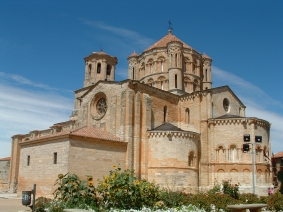
A wine town above the Duero crowned by a richly carved 12th-century collegiate church, with a historic core of eleven protected monuments and sweeping river views.
 Most Beautiful Villages
A fortified hilltop village of slate and granite near the Portuguese border, its castle and walled streets rising above the rivers at the gateway to Lake Sanabria.

A Templar castle town on the Portuguese border in Zamora, where medieval walls still stand and a treaty signed in 1297 shaped the map of Iberia.

A hilltop town in Zamora whose castle has sheltered medieval queens and rebel bishops, set above the dramatic landscape where Castilla y León meets the Portuguese border.

A city of striking Romanesque architecture, Spain's richest concentration of it, rising above the River Duero on a rocky plateau in Castilla y León, shaped by centuries as a frontier fortress between Christian and Moorish Spain.

A small Zamoran hill town whose roots go back to the Iron Age, sitting beside a national hunting reserve in the Sierra de la Culebra and still marked by the ancient Roman road that once linked Braga to Astorga.