Conjuntos Históricos
Spain’s Heritage Towns
Beyond the big cities lies an older Spain, walled hilltop villages, Renaissance quarters, whole medieval centres so well preserved the state itself protects them. These are the places where you round a corner and find a 900-year-old church with no one else around. This is your guide to visiting them.
625 towns across 17 regions, each with photos, a map, and honest notes on what it’s like to visit.
Browse by region
All towns
 Most Beautiful Villages
A long, thin town strung along a hillside under a ruined castle, and one of the quieter, more atmospheric stops on the Camino Francés.

Home to San Martín de Tours, one of the purest Romanesque churches in Europe, on the Palencia stretch of the Camino de Santiago.
 Most Beautiful Villages
A walled medieval village of barely 300 souls, its cobbled lanes and single gateway so well preserved it feels lifted straight from the 15th century.
 Most Beautiful Villages
Known as the cradle of Castile, this Arlanza-river village guards a rare 10th-century defensive tower and a timber-framed old town tied to Count Fernán González.

A Benedictine monastery town famed for its two-storey Romanesque cloister and the Gregorian chant of its monks, set in the quiet hills south of Burgos.
 Most Beautiful Villages
The Villa Ducal de Lerma: a planned Baroque town crowning a ridge above the Arlanza, built around one of Spain's grandest ducal palaces and arcaded plazas.

A hilltop castle keep watches over a near-perfect plaza of timbered houses and a Renaissance palace, deep in Burgos's Ribera del Duero wine country.
 Most Beautiful Villages
A walled cathedral city near the Portuguese frontier, its ramparts, palaces and 14th-century castle keep recalling centuries as a contested border stronghold.
 Most Beautiful Villages
The first village in Spain ever granted heritage protection, a tangle of timber-and-stone houses in the Sierra de Francia, little changed in centuries.
 Most Beautiful Villages
A steep mountain village in the Sierra de Béjar, its sloping streets cut by stone water channels and lined with the tall, balconied houses of old pork curers.
 Most Beautiful Villages
A compact walled town on the edge of the Tierra de Campos plateau, now Spain's first 'book village,' its medieval ramparts wrapped around a warren of bookshops.

The City of the Admirals in the Tierra de Campos, its arcaded main street and soaring Gothic churches a legacy of wealth from the wool and grain trade.
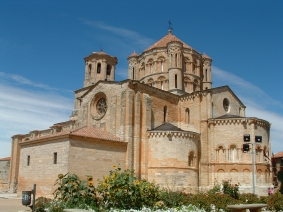
A wine town above the Duero crowned by a richly carved 12th-century collegiate church, with a historic core of eleven protected monuments and sweeping river views.
 Most Beautiful Villages
A fortified hilltop village of slate and granite near the Portuguese border, its castle and walled streets rising above the rivers at the gateway to Lake Sanabria.

Where the Camino Francés meets Roman ruins and a fairy-tale Episcopal Palace by Gaudí, capital of the Maragatería and a city of richly layered history.

A green, slate-roofed Camino town where two rivers meet at the edge of Galicia, home to the Romanesque 'Door of Forgiveness' that absolved ailing pilgrims.

Dominated by a vast Templar castle above the meeting of two rivers, the capital of El Bierzo and a major waypoint on the Camino de Santiago.
 Most Beautiful Villages
A village spilling down a rocky spur above the Duratón river gorges, ringed by Romanesque churches and the remains of Fernán González's castle.
 Most Beautiful Villages
A russet-stone medieval town in north-east Segovia, its arcaded plaza, town gate and palace façades glowing red in the late-afternoon light.

Crowned by one of Spain's most dramatic castles, a long white ship of stone on a ridge, now home to the provincial Wine Museum in the heart of Ribera del Duero.

A UNESCO World Heritage city in Jaén, Úbeda holds what archaeologists say is the oldest scientifically documented urban site in western Europe, surrounded by Renaissance palaces, medieval churches, and the layered stones of six thousand years of continuous human presence.

A UNESCO World Heritage city in Jaén, Andalucía, where Bronze Age foundations lie beneath Roman, Visigoth, Moorish, and Renaissance stone, all within a single historic centre.
 Most Beautiful Villages
A medieval fortress town in Teruel, Aragón, whose Moorish castle, intact city walls, and ochre-red rooftops trace a thousand years of contested rule above a river gorge.
 Most Beautiful Villages
A medieval fortress town in the Aragonese Pyrenees, where a castle and Romanesque collegiate church rise above the confluence of two rivers on the route to the high mountain passes of Huesca.

A walled medieval town in Zaragoza province, its four Romanesque churches, 16th-century tunnel and 1639 monumental fountain marking it as one of Aragón's most historically layered stops.

A former independent county capital in Girona, its medieval bridges, Jewish baths, Romanesque monastery, and Gothic palace forming one of Catalonia's most coherent surviving medieval ensembles.

A whitewashed fishing town on the rocky Cap de Creus peninsula in Girona, long favoured by Salvador Dalí, Marcel Duchamp, and Picasso, where deep geographic isolation preserved both its dialect and its architecture.
 Most Beautiful Villages
Once the governing seat of the powerful Order of Calatrava and later shaped by German banking dynasties, Almagro in Ciudad Real preserves Spain's only intact Golden Age theatre courtyard alongside a grand arcaded plaza built in the Flemish style.

A cathedral city in Guadalajara province, its bishop's castle, Romanesque churches, and medieval street plan rising above the Henares valley where Celtiberians, Romans, and Moors all left their mark.
 Most Beautiful Villages
Chinchón's Plaza Mayor, a ring of timber balconies and arcaded facades that has hosted bullfights, executions, and Orson Welles, makes this Madrid province town one of the most distinctive squares in Spain.
As featured on
