The 8 best heritage towns in Andalucía
From Ronda's vertiginous gorge to the Moorish labyrinth of Baeza, Andalucía holds some of Spain's most dramatic officially protected historic centres.
Andalucía has more officially designated Conjuntos Históricos than any other Spanish region, over fifty historic centres formally protected under state heritage law. These are not tourist reconstructions. They are lived-in towns where medieval street plans, Moorish arches, Renaissance façades, and Roman walls have survived in continuous use. Here are eight that reward the detour.
Ronda
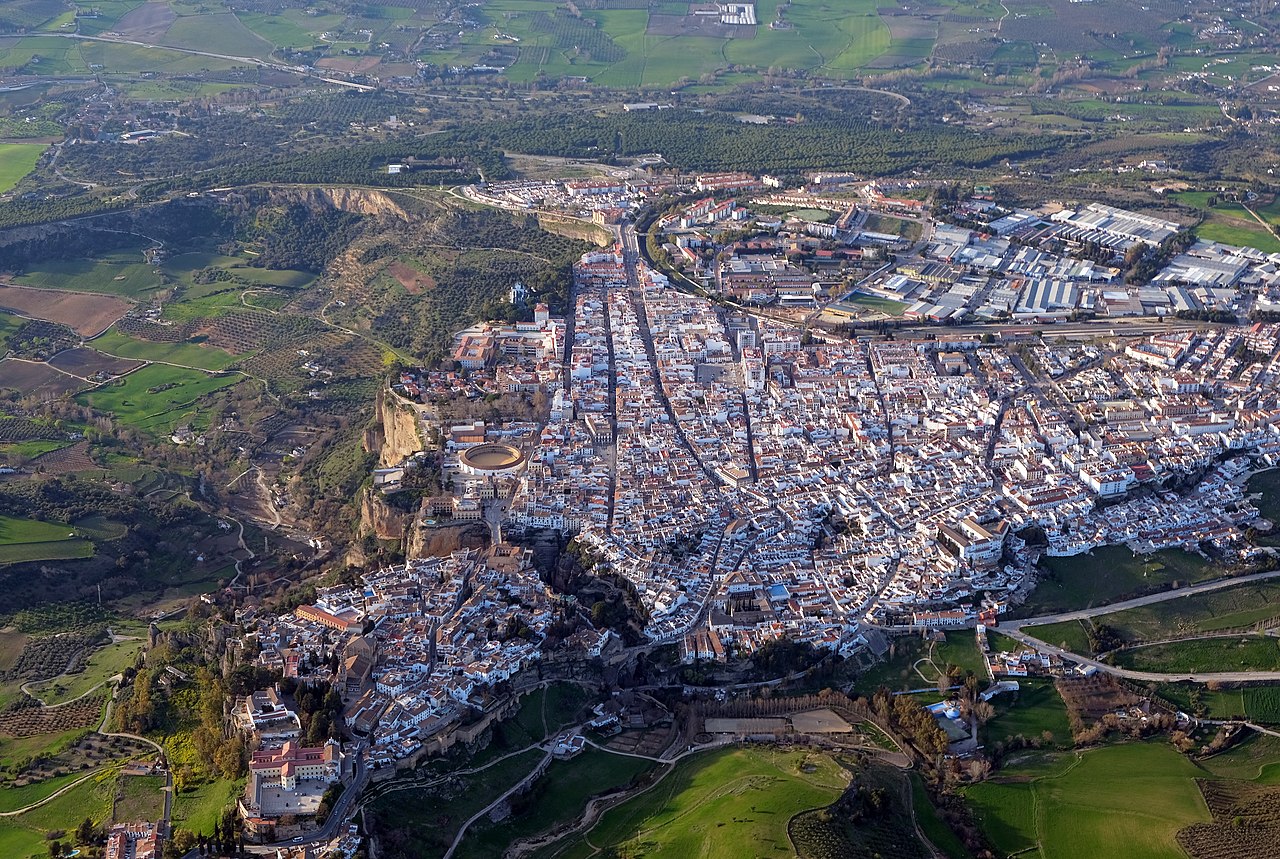
No photograph does the gorge justice. The Tajo, a 100-metre chasm cut by the Guadalquivín river, divides Ronda's old and new quarters, joined by the 18th-century Puente Nuevo. The medina is compact enough to walk in an afternoon: the Arab baths are among the best-preserved on the peninsula, and the Plaza de Toros (1785) claims to be the oldest bullring in Spain. Stay one night and the day-trippers disappear with the evening buses.
Baeza and Úbeda
These twin Renaissance towns in Jaén province were declared a UNESCO World Heritage Site together in 2003, and it shows, their 16th-century cathedral squares and arcaded palaces feel almost impossibly intact. Both are Conjuntos Históricos. Úbeda is larger and busier; Baeza quieter and easier to absorb in a single day. If you can only do one, Baeza.
Baeza town guide →
Úbeda town guide →
Carmona
Carmona sits on a sandstone ridge above the Corbones river plain east of Seville, close enough for a half-day but distinctive enough to deserve longer. The Roman necropolis on the western edge of town is one of the largest in Europe, and the Alcázar de la Puerta de Sevilla (a Carthaginian gate reinforced successively by Romans, Visigoths, and Moors) anchors the historic core. The parador occupies a converted Moorish fortress with views across the Guadalquivir plain that make breakfast worth lingering over.
Vejer de la Frontera
White cube houses climb a steep hill above the Campo de Gibraltar, and the old town is dense enough that GPS becomes useless after two turns. Vejer is fashionable, there are good restaurants, boutique hotels, and more international visitors than a decade ago, but the basic urban structure of alleys, plazas, and whitewashed walls remains genuinely old. The castle keep dates to the 10th century, and the walled medina is well-preserved enough to be disorienting.
Vejer de la Frontera town guide →
Medina Sidonia
The claim is that Medina Sidonia is the oldest continuously inhabited town in Iberia, Phoenician, Carthaginian, Roman, Visigothic, Moorish, and finally Christian in 1264. The Roman sewers are still walkable. The hilltop position means views across the province to the Atlantic on clear days, and the tortas de aceite and alfajores from the convent bakeries are among the best in the south.
Niebla
Niebla's Roman walls are the most complete in Spain, four kilometres of curtain wall with forty turrets encircling the entire old town, so intact you can walk the perimeter. The town itself is small and quiet, which makes the fortifications all the more striking: they were built to protect something important (the river crossing on the road to Huelva) and have simply never been demolished. The castle is open and largely empty, which suits it.
Lucena
Lucena is the one on this list that most visitors skip, and it shows in the crowd levels. In the 10th and 11th centuries it was one of the great centres of Jewish intellectual life in al-Andalus, the philosopher Solomon ibn Gabirol was born here, and the community produced scholars, poets, and scientists. The Castillo del Moral, where Boabdil (the last Nasrid sultan of Granada) was briefly imprisoned in 1483, still stands in the centre of town.
Planning your visit
All eight towns are Conjuntos Históricos, Spain's primary heritage designation, protecting not just individual monuments but the character and layout of the entire historic core. What this means in practice: the streets are narrow, parking is limited to the periphery, and the scale is human. Budget half a day minimum for each, a full day for Ronda, Carmona, or Úbeda.
The best base for covering most of these is Seville, six of the eight are within two hours by car. Ronda and Vejer are easier from Málaga or the Costa del Sol. Baeza and Úbeda are most naturally reached from Jaén or Granada.
Towns mentioned in this post

Ronda stands on a dramatic gorge in Málaga, its Moorish old quarter, Arab baths, ancient bullring, and an 18th-century bridge spanning a 100-metre drop to the river below making it one of Andalucía's most historically layered towns.

A UNESCO World Heritage city in Jaén, Andalucía, where Bronze Age foundations lie beneath Roman, Visigoth, Moorish, and Renaissance stone, all within a single historic centre.

A UNESCO World Heritage city in Jaén, Úbeda holds what archaeologists say is the oldest scientifically documented urban site in western Europe, surrounded by Renaissance palaces, medieval churches, and the layered stones of six thousand years of continuous human presence.

A hilltop city in Sevilla province, walled since Carthaginian times, whose Roman necropolis, medieval gates, and more than five millennia of continuous occupation make it one of the most layered archaeological sites in Andalucía.
 Most Beautiful Villages
A white hilltop town in Cádiz, its Moorish castle, medieval walls, and labyrinthine streets shaped by five centuries of Arab rule and the sea battle of Trafalgar fought just offshore.

Perched on a hilltop in the province of Cádiz, Medina Sidonia carries the physical traces of every power that shaped Andalucía, Roman sewers beneath its streets, medieval walls above them, and a skyline of churches still standing after two thousand years of continuous settlement.

Ringed by what are considered the largest and best-preserved Almohad walls in Europe, this ancient Huelva town on the Río Tinto carries the marks of every civilisation that shaped Andalucía.

A city in Córdoba province where Julius Caesar once fought, where Jews built a medieval quarter known as the Pearl of Sepharad, and where Granada's last emir ended up imprisoned in a castle tower.