Guadalajara · Castilla-La Mancha
Brihuega
- Province
- Guadalajara
- Status
- Conjunto Histórico
- Population
- 2,826
- Elevation
- 894 m
Brihuega is a heritage town in the province of Guadalajara, Castilla-La Mancha, Spain. It is designated a Conjunto Histórico (Spain's national heritage designation for historic ensembles). Population 2,826 (2025), elevation 894m.
A walled medieval town in Guadalajara province, where three Romanesque churches, a castle, and stretches of ancient fortifications rise above the valley of the Río Tajuña.
Key facts
- Province
- Guadalajara
- Heritage status
- Conjunto Histórico
- Population
- 2,826 (2025)
- Elevation
- 894 m
History of Brihuega
Brihuega began as a Celtiberian settlement called Brioca. By the eleventh century it had become significant enough that the Moorish king Al-Mamún of Toledo used it to shelter his exiled friend Alfonso, King of León, after Alfonso's defeat in battle in 1072. The town's position made it strategically important during the Christian campaigns to take Toledo, which succeeded in 1085.
That same year Alfonso VI seized the Kingdom of Castile and took control of the Tajuña valley. In 1086 he granted Brihuega to the Archbishop of Toledo, who built the first fortress above the valley. The town's walls were completed by another Archbishop of Toledo, Rodrigo Jiménez de Rada, who granted Brihuega its municipal charter in 1242.
The town's greatest period of prosperity came in the mid-eighteenth century. In December 1710, during the War of the Spanish Succession, forces loyal to Philip V stormed Brihuega and forced the British troops of General James Stanhope to surrender. Later, a Royal Cloth Factory was established, one of the most prestigious industrial sites in Spain, though it closed in 1835.
In March 1937, the streets and surrounding land saw the Battle of Guadalajara, a significant Republican victory over rebel forces and their Italian allies. The medieval charter document that had defined the town's legal identity disappeared during the Civil War and only resurfaced in 2022, when it was returned to the mayor.
Heritage & Monuments
Brihuega's historic centre was designated a protected historic-artistic site in 1973. The town has three medieval churches: San Felipe, San Miguel, and Santa María de la Peña, along with surviving remains of a fourth, San Simón. Sections of the old town wall still stand, including two original gateways, the Arco de Cozagón and the Puerta de la Cadena.
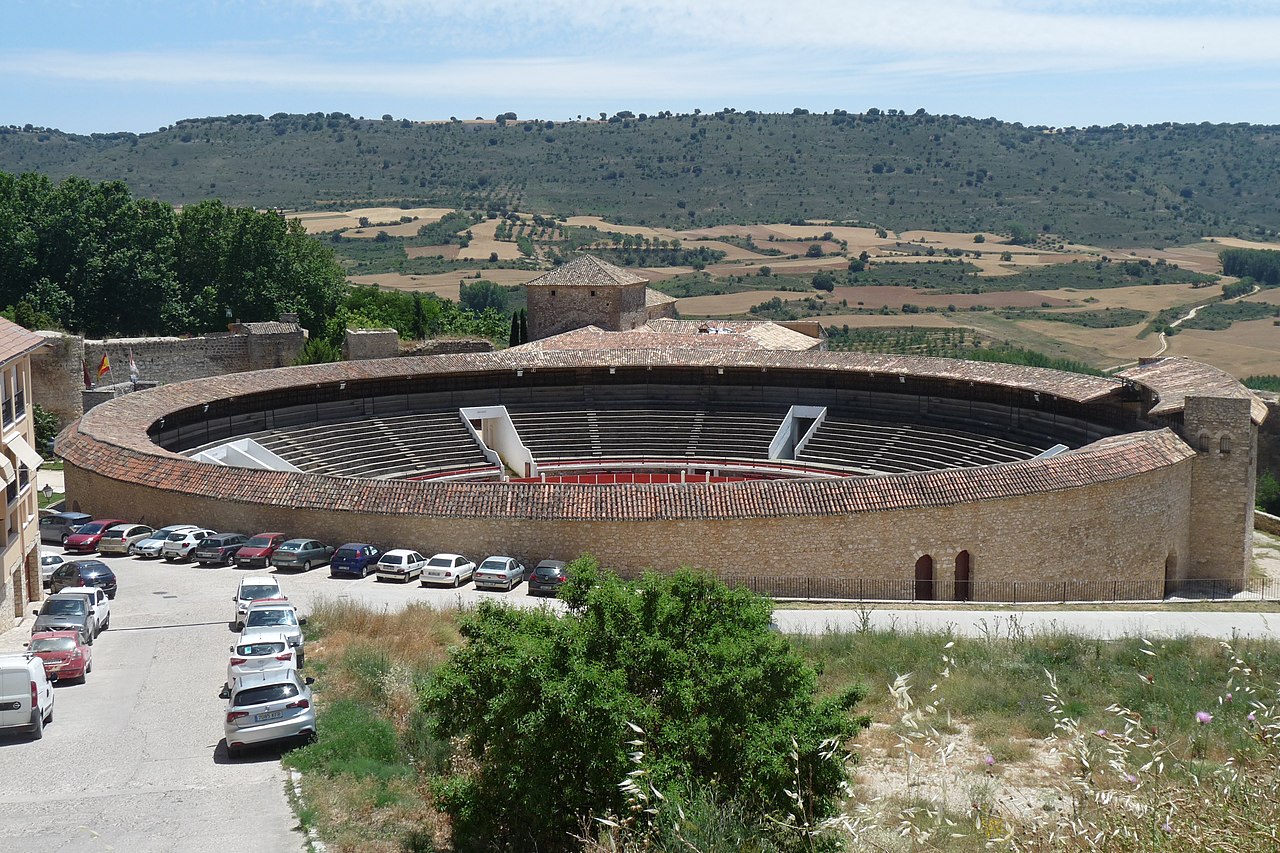
To the south stands the castle of Brihuega, whose interior was used for centuries as a cemetery. Nearby are the bullring, designed by architect Ambrosio Arroyo, and the Convento de San José, now used as an exhibition space. The Royal Cloth Factory, dating from the eighteenth century, is another notable building in the town.
On the outskirts, some remains of the Palacio de Ibarra survive. At the town entrance stands a granite pillory column, tall, cylindrical, with a granite base, that signalled Brihuega's status as a villa with its own jurisdiction. It is a physical marker of the 1242 charter, which notably granted equal legal treatment to Christian, Jewish, and Muslim residents alike.
Museums in Brihuega
Museum data and ratings from Google. Check opening hours before you go.
Where to stay in Brihuega
Hotels, guesthouses and holiday rentals in and around Brihuega, with live prices.
Search all places to stay in Brihuega on Booking.com →Affiliate links: if you book, Castizo Spain may earn a commission at no extra cost to you. More
Where to eat in Brihuega
Ratings & restaurant data from Google.
Regional food & drink
Castilla-La Mancha is known for Queso manchego, Pisto manchego and Migas, among 5 regional specialities.
Watch: Queso manchego
Fiestas in Brihuega
Dates recur annually but can shift by a few days. Confirm with the ayuntamiento before planning a trip around one.
- Virgen de la Peña15 August
Gallery
Location
Quick answers
Is Brihuega worth visiting?▾
A walled medieval town in Guadalajara province, where three Romanesque churches, a castle, and stretches of ancient fortifications rise above the valley of the Río Tajuña.
Why is Brihuega a heritage town?▾
Brihuega is officially designated a Conjunto Histórico, Spain's national heritage designation for historic ensembles.
What is the traditional food in Castilla-La Mancha?▾
Castilla-La Mancha is known for Queso manchego, Pisto manchego, Migas and Duelos y quebrantos. You'll find these regional specialities in and around Brihuega.
What is there to see in Brihuega?▾
Brihuega's historic centre was designated a protected historic-artistic site in 1973. The town has three medieval churches: San Felipe, San Miguel, and Santa María de la Peña, along with surviving remains of a fourth, San Simón.
What is the history of Brihuega?▾
Brihuega began as a Celtiberian settlement called Brioca. By the eleventh century it had become significant enough that the Moorish king Al-Mamún of Toledo used it to shelter his exiled friend Alfonso, King of León, after Alfonso's defeat in battle in 1072.
When are the fiestas in Brihuega?▾
Brihuega celebrates Virgen de la Peña (15 August). Dates recur annually but can shift by a few days.
Nearby heritage towns
A hilltop town in Guadalajara province, its Gothic gateway, Mudéjar church, and medieval plaza still bearing the marks of a Jewish merchant quarter that vanished in 1492.
A castle-crowned town in Guadalajara where a medieval battle was averted by a queen and a future Spanish consort once expelled a royal favourite on the road to Madrid.
A castle town in Guadalajara province where a medieval fortress, a Romanesque church, and the old trade routes of Castilla-La Mancha converge above the valley.
A rare intact 19th-century agricultural colony near Guadalajara, designed by a notable architect for a philanthropic countess and now one of the most complete examples of its kind in Castilla-La Mancha.
A ducal town in Guadalajara's Alcarria plateau where a princess of Éboli died under house arrest, Saint Teresa founded a convent, and Saint John of the Cross launched a reform movement that reshaped Carmelite life across Europe.
A cathedral city in Guadalajara province, its bishop's castle, Romanesque churches, and medieval street plan rising above the Henares valley where Celtiberians, Romans, and Moors all left their mark.
Visiting from a nearby city?
Brihuega makes a great day trip from:
Last updated 15 July 2026.