Zamora · Castilla y León
Toro
- Province
- Zamora
- Declared
- 1973
- Status
- Conjunto Histórico
- Population
- 8,336
- Elevation
- 735 m
Toro is a heritage town in the province of Zamora, Castilla y León, Spain. It was designated a Conjunto Histórico (Spain's national heritage designation for historic ensembles) in 1973. Population 8,336 (2025), elevation 735m.
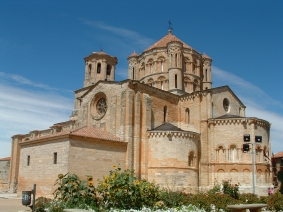
A wine town above the Duero crowned by a richly carved 12th-century collegiate church, with a historic core of eleven protected monuments and sweeping river views.
Key facts
- Province
- Zamora
- Heritage status
- Conjunto Histórico (declared 1973)
- Population
- 8,336 (2025)
- Elevation
- 735 m
History of Toro
Archaeological evidence suggests Toro's origins trace back to a Celtiberian settlement, possibly the ancient Vaccean city mentioned by the Greek geographer Ptolemy. Some historians identify this with Arbocala, conquered by Hannibal according to Titus Livy. A granite bull sculpture, discovered by Christian settlers, may have given the city its current name.
Roman presence remains uncertain, with only scattered archaeological remains found mainly in nearby Tagarabuena. Some scholars argue the original settlement disappeared after Hannibal's conquest. The Visigothic king Leovigildo may have founded "Villa Gothorum" in 573 as a fortress against the Suevi, though this is disputed.
The definitive repopulation occurred in 899 under Infante García during Alfonso III's reign. The new settlement attracted diverse groups including Mozarabs from the south, Mudéjars who worked on fortifications, and northern peoples including Asturians and Basques. Toro's strategic position between Christian and Muslim territories made it crucial for consolidating Christian control north of the Duero River.
Heritage & Monuments
Toro received historic-artistic site designation and contains eleven monuments plus a historic bridge classified as Cultural Heritage Sites. The Monasterio de Sancti Spiritus el Real houses the Sacred Art Museum, featuring unique polychrome painted cloths depicting Passion scenes from Italian-Flemish prints. The monastery's highlight is the mausoleum sarcophagus of Beatriz de Portugal, Queen consort of Castilla y León.
Other significant monuments include Santa María de la Vega, San Lorenzo el Real, San Pedro del Olmo ruins, San Sebastián church, Santo Sepulcro church, and San Salvador de los Caballeros. The wooden bullring, constructed in 1828 and reopened in 2010, and the Teatro Latorre are also protected. The primitive city walls with surviving gates, particularly the Mercado gate, hold heritage status, along with noble architectural coats of arms throughout the city.
The former Dominican Convent of San Ildefonso, founded by Queen María de Molina between 1285-1290, was historically important as a royal residence where King Juan II was born in 1405.
Museums in Toro
Museum data and ratings from Google. Check opening hours before you go.
Where to stay in Toro
Hotels, guesthouses and holiday rentals in and around Toro, with live prices.
Search all places to stay in Toro on Booking.com →Affiliate links: if you book, Castizo Spain may earn a commission at no extra cost to you. More
Where to eat in Toro
Ratings & restaurant data from Google.
Regional food & drink
Castilla y León is known for Cochinillo asado, Lechazo and Morcilla de Burgos, among 5 regional specialities.
Watch: Lechazo
Gallery
Location
Quick answers
Is Toro worth visiting?▾
A wine town above the Duero crowned by a richly carved 12th-century collegiate church, with a historic core of eleven protected monuments and sweeping river views.
Why is Toro a heritage town?▾
Toro is officially designated a Conjunto Histórico, declared in 1973, Spain's national heritage designation for historic ensembles.
What is the traditional food in Castilla y León?▾
Castilla y León is known for Cochinillo asado, Lechazo, Morcilla de Burgos and Sopa de ajo. You'll find these regional specialities in and around Toro.
How big is Toro?▾
Toro has a population of about 8,336 (2025), and sits at 735 m above sea level.
What is there to see in Toro?▾
Toro received historic-artistic site designation and contains eleven monuments plus a historic bridge classified as Cultural Heritage Sites. The Monasterio de Sancti Spiritus el Real houses the Sacred Art Museum, featuring unique polychrome painted cloths depicting Passion scenes from Italian-Flemish prints.
What is the history of Toro?▾
Archaeological evidence suggests Toro's origins trace back to a Celtiberian settlement, possibly the ancient Vaccean city mentioned by the Greek geographer Ptolemy. Some historians identify this with Arbocala, conquered by Hannibal according to Titus Livy.
Nearby heritage towns
A compact walled town on the edge of the Tierra de Campos plateau, now Spain's first 'book village,' its medieval ramparts wrapped around a warren of bookshops.
A castle town on the Castilian meseta where two Renaissance church towers punctuate the skyline and a 15th-century queen's imprisonment left a permanent mark on royal history.
A city of striking Romanesque architecture, Spain's richest concentration of it, rising above the River Duero on a rocky plateau in Castilla y León, shaped by centuries as a frontier fortress between Christian and Moorish Spain.
Sitting above the Duero on the old road between northwest Spain and the Castilian heartland, Tordesillas is where a treaty once divided the New World and where a queen spent forty-six years confined in a royal monastery.
A Castilian wine town in Valladolid with Roman roots, a history shaped by medieval battles and French occupation, and the oldest Denominación de Origen in Castilla y León.
Dominated by a vast red-brick castle and encircled by remnants of medieval walls, this Castilian market town in Valladolid province once stood at the heart of royal Spain.
Visiting from a nearby city?
Toro makes a great day trip from:
Last updated 3 June 2026.