Day trips from León
The Camino Francés runs east and west from León through Sahagún, Astorga and the Maragato village of Castrillo de los Polvazares, with El Bierzo and Molinaseca beyond the mountains.
85 heritage towns within 150 km, closest 0 km away, furthest 150 km. Drive times estimated at 70 km/h average.

Once the capital of a medieval kingdom and host to Europe's first parliamentary assembly, León sits at the crossroads of Castilla y León where Roman walls still stand and the Camino de Santiago passes through the old city.

A small capital of the upper Curueño valley in León, where a restored medieval tower stands alongside an 18th-century baroque church and a living craft tradition unique to this river country.

Where the Camino Francés meets Roman ruins and a fairy-tale Episcopal Palace by Gaudí, capital of the Maragatería and a city of richly layered history.

A medieval walled town on an old Roman road through León, where a castle-palace, a Gothic arch, and a stone bridge over the Río Cea mark centuries of pilgrims passing toward Santiago de Compostela.

A stone village in the León meseta whose identity was built by the maragato muleteers, merchants who once moved fish and provisions between Galicia and the Spanish interior along one of the peninsula's great trade corridors.

A small León municipality on the Esla river, sitting within a regional park where the highest concentration of Vadinian Celtic funerary stones in Spain has been found.

A small León village split across two hilltops, its very name rooted in the Latin word for twins and its two neighbourhoods divided by an ancient road.

Once the "Spanish Cluny", a Benedictine monastery town on the Camino de Santiago in León whose Mudéjar brick churches mark one of medieval Iberia's great artistic and religious centres.

A Leonese plains town where Spain's first purpose-built artillery castle still stands above a palace that the local people bought back from their counts for six pesetas.

A small municipal capital in León's Babia comarca, sitting 73 kilometres from the provincial city on the edge of the mountains that border Asturias.

A small village in León's high country, sitting above 1,200 metres in the municipality of Crémenes.

A fortified market town on the plains of León, where stretches of medieval wall still stand, a hilltop castle rises in ruins above the old streets, and the layout of the town speaks to a thousand years of kings, lords, and contested frontiers.

A mountain municipality in León, sitting above 1,200 metres in the valleys between the Gistredo and Los Cilleros ranges, with roots stretching from Asturian hill forts through Roman gold mining to medieval Leonese repopulation.

A small settlement in León's El Bierzo comarca, carrying one of the longest place names in all of Spain.

A town of counts and kings in the Palencia meseta, where a ruined medieval castle still stands above a place old enough to have fought Rome, and where the first recorded bullfight in Spanish history took place in 1128.

A town in the Boeza valley of León where Roman roads, medieval parishes, and the Camino de Santiago converge at a crossroads that has drawn travellers for two thousand years.

A village on the Camino Francés in León where pilgrims have crossed the same seven-arched Romanesque bridge over the Meruelo river since the Middle Ages, entering a street of stone manor houses that leads to a baroque sanctuary still holding a medieval pietà.

A Camino waypoint on the edge of Oviedo, where a medieval toll bridge, a Romanesque apse, and a baroque pilgrim fountain mark centuries of passage through the Asturian coalfields.

A village in the Bierzo region of León where the old Leonese language is still spoken in daily life.

A quiet León village with two substantial baroque and neoclassical churches, one sheltering a Gothic Christ and one of Spain's oldest brotherhoods, active since before 1522.

Deep in the Aquilian mountains of León, a mozarabic church founded by a hermit-bishop stands at the heart of a slate-roofed village that has changed little since the Middle Ages.

A prosperous medieval town on the Palencia stretch of the Camino de Santiago, Carrión de los Condes preserves two outstanding Romanesque churches, a monastery with a Renaissance cloister, and fragments of its old walls.

Dominated by a vast Templar castle above the meeting of two rivers, the capital of El Bierzo and a major waypoint on the Camino de Santiago.

A quiet Castilian town on the Palencia plain, shaped by two names, two medieval churches, and the slow water of the Canal de Castilla beside a restored lagoon.

A small Asturian parish where a donated monastery from 1104 left behind a church that survived centuries before the Spanish Civil War reduced it to rubble.

The City of the Admirals in the Tierra de Campos, its arcaded main street and soaring Gothic churches a legacy of wealth from the wool and grain trade.

A designated Historic Ensemble in the Cantabrian mountains, Dobres preserves noble manor houses bearing centuries-old heraldic stones and a single-nave church whose art spans the medieval to the 19th century.

One of the oldest documented towns in Palencia, Cervera de Pisuerga sits where mountain rivers meet, its porticoed plaza, noble palaces, and a Gothic church holding a masterpiece of Flemish painting still intact after twelve centuries of recorded history.

A protected historic ensemble in Cantabria, its stone manor houses, forged-iron balconies, and a medieval tower standing as quiet evidence of centuries of mountain life.

A small Asturian parish in the council of Cabranes, known for a pre-Romanesque church and a museum dedicated to rural school life.

A Castilian farming town in Palencia where six churches once served three thousand souls, and works by Pedro Berruguete still hang in the converted church that now serves as its sacred art museum.

A small Zamoran hill town whose roots go back to the Iron Age, sitting beside a national hunting reserve in the Sierra de la Culebra and still marked by the ancient Roman road that once linked Braga to Astorga.

A castle town on the Castilian plain of Valladolid, where an Iron Age Vaccean city, a Roman municipium, and a medieval fortress built by one of the region's most powerful noble families all occupy the same promontory above Tierra de Campos.

A market town on the Camino de Santiago in Asturias, shaped by Alfonso X and walled against the chaos of medieval lords, with Romanesque churches scattered across its parishes and a street plan that still follows the pilgrim road.

Capital of the Liébana valley in Cantabria, where two rivers meet below a medieval tower, and a waypoint on the Ruta Lebaniega linking the coastal Camino de Santiago to the Camino Francés.

A cider-country town on the Asturian coast where a UNESCO-listed pre-Romanesque church, medieval walls, and a handful of ancient village churches make it one of the most monument-rich councils on the northern Camino.

A walled medieval town in Palencia's Tierra de Campos, dominated by a castle and a collegiate church whose tower the locals call the Giralda of the Plains, declared a historic monument and one of Spain's most beautiful villages.

A compact walled town on the edge of the Tierra de Campos plateau, now Spain's first 'book village,' its medieval ramparts wrapped around a warren of bookshops.

A green, slate-roofed Camino town where two rivers meet at the edge of Galicia, home to the Romanesque 'Door of Forgiveness' that absolved ailing pilgrims.

Home to San Martín de Tours, one of the purest Romanesque churches in Europe, on the Palencia stretch of the Camino de Santiago.

A remote mountain village in the Leonese Ancares, known for its exceptional cluster of pallozas, ancient oval stone-and-thatch dwellings whose design reaches back to the pre-Roman hillforts of the region.

A walled medieval town in Palencia where six of the original seven gates still stand, a Premonstratensian monastery anchors the old centre, and a hilltop castle overlooks the Pisuerga river.

A historic fishing and seafaring quarter in Gijón, Asturias, built on a tidal headland where Roman walls, a medieval fortress, and a landmark Chillida sculpture mark two thousand years of continuous life by the sea.

A walled Castilian town on the Palencia meseta where a Gothic parish church, a Romanesque castle chapel, and traces of a medieval monastery still mark the outline of a place that once hosted kings and signed treaties.

A small Asturian fishing village whose rocky coastline holds real dinosaur tracks, a lighthouse standing since 1864, and two historic quarters recognised as a protected artistic ensemble.

A fortified hilltop village of slate and granite near the Portuguese border, its castle and walled streets rising above the rivers at the gateway to Lake Sanabria.

The provincial capital of Palencia carries layers from Celtiberian settlement through Visigothic royal court to medieval kingdom, and stands today as home to one of Spain's largest Gothic cathedrals and a Christ statue counted among the world's tallest.

A market town in the green hills of Asturias, sitting below a medieval castle on a Camino route that winds through the valleys west of Oviedo.

An Asturian port city whose medieval old town, royal charter, Romanesque churches, baroque palaces and all, earned protected status in 1955, and whose waterfront now anchors a striking cultural centre designed by Oscar Niemeyer.

A pre-Roman mountain village in Lugo's Sierra de Ancares, its tight cluster of ancient pallozas and stone storehouses preserved so intact it earned protected status as early as 1931.

A coastal Asturian town with medieval walls, a ruined ducal palace, and a harbour history that once sent its ships to the ports of Andalusia, Portugal, Flanders, and England.

A walled medieval town on the Palencia plain, where Gothic churches, a Mudéjar royal palace, and more than two kilometres of underground wine galleries survive largely intact.

A mountain village in Cantabria whose entire historic centre is a protected cultural monument, anchored by a manor house that was once the home and library of one of Spain's leading literary figures.

Sitting at the confluence of the Pisuerga and Carrión rivers in Palencia, Dueñas guards a surviving medieval gateway, a Roman mosaic in its soil, and a history that stretches from Bronze Age settlements to the old royal road to Burgos.

A compact fishing port on the Asturian coast whose amphitheatre of stacked houses rises steeply above a working harbour, backed by medieval churches, a Gothic port fortress, and one of Spain's most surprising private art collections.

A Templar castle town on the Portuguese border in Zamora, where medieval walls still stand and a treaty signed in 1297 shaped the map of Iberia.

A small Asturian parish on the Camino de Santiago, where a pilgrim hospital and the church of Santa María mark centuries of travellers passing through on their way to Santiago de Compostela.

A small Asturian town on the Cantabrian coast where indiano architecture, a prehistoric cave, and a royal prize mark it as one of the most recognised villages in the Principality of Asturias.
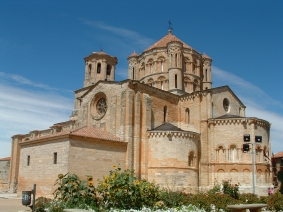
A wine town above the Duero crowned by a richly carved 12th-century collegiate church, with a historic core of eleven protected monuments and sweeping river views.

A long, thin town strung along a hillside under a ruined castle, and one of the quieter, more atmospheric stops on the Camino Francés.

A declared historic-artistic village in the Cantabrian mountains, where traditional stone manor houses line the streets and the ancient craft of wooden clog-making is still part of daily life.

A city of striking Romanesque architecture, Spain's richest concentration of it, rising above the River Duero on a rocky plateau in Castilla y León, shaped by centuries as a frontier fortress between Christian and Moorish Spain.

A Cantabrian town on the old coastal road to Castile, once crossed by King Charles I himself at the ford over the River Saja.

The municipal capital of Cabuérniga sits at 260 metres on the valley floor in Cantabria, its 16th-to-18th-century stone farmhouses and two grand manor houses recognised as a protected historic ensemble.

The former royal capital of Castile, Valladolid gave birth to Philip II and Philip IV, hosted the proclamation of Ferdinand III, and shaped the course of Spanish history from its grand plazas and palaces for centuries.

A Roman legionary base turned medieval episcopal town, Sasamón stands at a crossroads of ancient roads in Burgos province, its Gothic collegiate church, the largest in the province after Burgos cathedral, rising over a walled old town still partly ringed by its medieval ramparts.

A stone mountain village in Cantabria, so uniformly well-preserved that it earned protected status in 1979 and is now listed among the most beautiful villages in Spain.

A castle-turned-archive holding 35 million royal documents rises above the Pisuerga river in Valladolid province, where Christian and Moorish armies once fought for control of Castile.

A medieval market town in Burgos province, its arcaded plaza, lone surviving gateway, and clutch of Gothic churches marking the centre of a district that once stretched across dozens of villages.

A small Castilian village that drops suddenly into a valley on the Burgos stretch of the Camino Francés, its Gothic church tower, medieval palace ruins, and ancient pilgrim hospital marking centuries of continuous passage.

A Cantabrian coastal town where a medieval castle, Gothic church, ancient walls, and a Camino de Santiago route converge above the waters of the Cantabrian Sea.

A small Cantabrian village on the upper Ebro where a Romanesque ensemble and traces of a Roman road mark centuries of continuous settlement.

Perched above the rivers Arlanza and Arlanzón in Palencia, this walled medieval town preserves a Gothic gateway, a ruined castle, and a history stretching from Celtiberian resistance to the last journey of Emperor Charles V.

Sitting above the Duero on the old road between northwest Spain and the Castilian heartland, Tordesillas is where a treaty once divided the New World and where a queen spent forty-six years confined in a royal monastery.

A Cantabrian coastal town where Antoni Gaudí, Lluís Domènech i Montaner, and Josep Llimona all left major works, making it one of the most concentrated collections of Modernista architecture in Spain outside Barcelona.

A Castilian wine town in Valladolid with Roman roots, a history shaped by medieval battles and French occupation, and the oldest Denominación de Origen in Castilla y León.

A Castilian farming town in Burgos province whose surviving medieval gate, Renaissance church, and centuries-old pilgrim hermitage speak quietly but clearly to anyone who slows down long enough to look.

A Cantabrian village of Baroque manor houses and heraldic stonework, awarded the 2021 Cantabria Village Prize for the quality of its historic centre and its ancient royal road.

A historic Cantabrian town where a fortified tower straddles the main street, Romanesque stonework carries erotic carvings on its eaves, and eight old watermills line the Besaya valley.

A castle town on the Castilian meseta where two Renaissance church towers punctuate the skyline and a 15th-century queen's imprisonment left a permanent mark on royal history.

A royal free town in the Burgos countryside, its Renaissance hall-church, late-Gothic jurisdictional pillar, and hillside of family wine cellars preserving the texture of Castilian life across seven centuries.

Built around a medieval collegiate church holding the relics of a Galilean martyr, and neighbour to the Palaeolithic cave paintings of Altamira, Santillana del Mar is one of Cantabria's most complete historic towns.

A small Burgos village whose towers, Romanesque church portal, and declared historic quarter preserve the deep imprint of a powerful medieval dynasty.

A hilltop village in Burgos province where a national-monument castle, noble stone mansions bearing heraldic shields, and a small medieval rock-cut necropolis preserve the layers of Old Castile in one tight valley.

A village of coats-of-arms and stone manor houses along the old royal road between Burgos and Santander, declared a Historic-Artistic Site for one of Cantabria's most intact concentrations of baroque and Renaissance architecture.
All towns listed are Conjuntos Históricos, Spain's highest official heritage designation, protecting the historic core and its character from incompatible development. Drive times are estimates based on 70 km/h average speed; actual times vary with route and traffic.