Day trips from Salamanca
Salamanca is itself a UNESCO World Heritage city and one of the great bases for exploring Castilla y León. The meseta has an extraordinary density of preserved medieval and Renaissance towns.
66 heritage towns within 150 km, closest 1 km away, furthest 149 km. Drive times estimated at 70 km/h average.

A university city of world-historical weight, where the grammar of Spanish was first codified, Columbus plotted his Atlantic crossing, and the foundations of international law were laid, all within one sandstone skyline in Castilla y León.

A town on the Río Tormes in Salamanca province where St Teresa of Ávila founded a convent, died, and was buried, her body still on display in the church she built.

Ledesma rises above a river bend in the Salamanca plain, its three kilometres of medieval walls and castle still intact, carrying a name older than Rome itself.

A market town in Salamanca province whose three linked porticoed squares, cathedral-scaled parish church, and deep roots in Leonese frontier history have earned it protected status as a historic ensemble.

A castle town on the Castilian meseta where two Renaissance church towers punctuate the skyline and a 15th-century queen's imprisonment left a permanent mark on royal history.

A castle that sheltered Queen Isabella and Emperor Charles V guards an ancient bridge on the Salamanca plain, where prehistoric rock and medieval stone trace three thousand years of Castilian history.

A small Salamancan hill town in the Sierra de Francia, founded in the medieval repopulation of León and still carrying the name of the counts who once shaped it.

A hilltop town in the Sierra de Francia of Salamanca, tied by legend to the discovery of one of the region's most venerated Marian shrines and home to the remains of the medieval holy woman who foretold it.

A fortified episcopal stronghold in the mountains of Ávila, where a ruined castle, medieval walls, and a Gothic collegiate church preserve the political dramas of 15th-century Castile.

A city of striking Romanesque architecture, Spain's richest concentration of it, rising above the River Duero on a rocky plateau in Castilla y León, shaped by centuries as a frontier fortress between Christian and Moorish Spain.

A castle with a cemetery inside its walls, a bullring that may be Spain's second oldest, and a parish church blending Gothic, Baroque, and Mudéjar styles, San Martín del Castañar punches well above its size in the Salamanca countryside.

A walled medieval village in Salamanca province whose complete circuit of 15th-century walls, four original gateways, and hilltop castle survive almost entirely intact.

A village of carved stone facades and timber-framed houses in the Sierra de Francia, where 388 painted portraits of former residents stare back at you from the walls of their old homes.

Birthplace of the fearsome Grand Duke of Alba and former summer seat of one of Spain's greatest noble dynasties, this walled Castilian town in Ávila province holds a French baroque palace, a medieval church-fortress, and a porticoed main square that has hosted everything from bullfights to Goya.
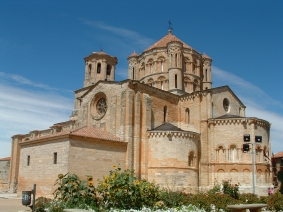
A wine town above the Duero crowned by a richly carved 12th-century collegiate church, with a historic core of eleven protected monuments and sweeping river views.

A former ducal capital on the edge of Salamanca province, where medieval walls, a Romanesque-mudéjar church, and a river-powered textile history speak to six centuries of life between the northern and southern mesetas.

The first village in Spain ever granted heritage protection, a tangle of timber-and-stone houses in the Sierra de Francia, little changed in centuries.

A steep mountain village in the Sierra de Béjar, its sloping streets cut by stone water channels and lined with the tall, balconied houses of old pork curers.

A castle, a Romanesque bridge, and medieval walls mark this Ávilan town on the Camino, once home to figures who helped shape Spain's conquest of the Americas.

A castle-topped hill town on the old Silver Route through Salamanca province, where medieval walls, a Romanesque church, and a granite bridge over the Cuerpo de Hombre river survive in close company.

A hilltop town in Zamora whose castle has sheltered medieval queens and rebel bishops, set above the dramatic landscape where Castilla y León meets the Portuguese border.

Dominated by a vast red-brick castle and encircled by remnants of medieval walls, this Castilian market town in Valladolid province once stood at the heart of royal Spain.

A Castilian wine town in Valladolid with Roman roots, a history shaped by medieval battles and French occupation, and the oldest Denominación de Origen in Castilla y León.

A royal town on the Castilian plain where Isabel la Católica spent her youth, its pentagonal castle rising above the meeting of the Adaja and Arevalillo rivers and its mudéjar monuments among the finest in the region.

Hervás, in the province of Cáceres, holds one of the best-preserved Jewish quarters in Spain, a medieval streetscape of steep alleys and timber-framed houses that crowds the banks of the Ambroz river.

Sitting above the Duero on the old road between northwest Spain and the Castilian heartland, Tordesillas is where a treaty once divided the New World and where a queen spent forty-six years confined in a royal monastery.

A walled cathedral city near the Portuguese frontier, its ramparts, palaces and 14th-century castle keep recalling centuries as a contested border stronghold.

A walled medieval town on the Vía de la Plata in Cáceres, its castle, church and stone streets intact inside ancient walls, abandoned in 1964 when a reservoir swallowed the surrounding valley, and now carefully restored.

A hill town in Cáceres whose streets climb steeply from the Jerte river through a medieval old quarter, built on the site of a former Jewish aljama and declared a historic-artistic ensemble.

Ávila's complete medieval walls, among the best preserved in Europe, still encircle a cathedral that doubles as a military tower, in the high plateau of Castilla y León.

A frontier castle town on the Salamanca-Portugal border, its medieval walls, gate arches, and hilltop keep bearing witness to centuries of disputed sovereignty between the kingdoms of León, Castile, and Portugal.

A compact walled town on the edge of the Tierra de Campos plateau, now Spain's first 'book village,' its medieval ramparts wrapped around a warren of bookshops.

A village in the Ávila hills whose whitewashed facades, distinctive chimneys, and balconied houses survive so intact that the Spanish state declared the whole ensemble a protected historic monument.

A town of traditional Extremaduran architecture in Cáceres province, declared a historic-artistic ensemble in its entirety, with a pentagonal arcaded square and a parish church holding Baroque churrigueresque altarpieces and sculptures by Aniceto Marinas.

A fortified lordship town in the Vera comarca of Cáceres, where a medieval castle, a parish church of centuries-old standing, and an ancient penitential rite called El Empalao have shaped life since the Reconquista.

A high medieval village in Cáceres where two mountain gorges meet, its Basque-roofed houses, Inquisition building, and old brothel all still standing on steep cobbled streets.

A castle-turned-archive holding 35 million royal documents rises above the Pisuerga river in Valladolid province, where Christian and Moorish armies once fought for control of Castile.

A protected historic ensemble in the Sierra de Gata, Cáceres, where adobe and slate houses step down a steep hillside in a maze of narrow lanes, some passing beneath overhanging upper floors, in a village that joined Spain's Most Beautiful Villages association in 2019.

A Templar castle town on the Portuguese border in Zamora, where medieval walls still stand and a treaty signed in 1297 shaped the map of Iberia.

Rising above the confluence of the Eresma and Voltoya rivers in Segovia province, Coca is defined by one of Spain's best-preserved castles and layers of history stretching from Iron Age city-state to Roman municipium to medieval fortress town.

A Cáceres hill town where a Renaissance palace built by a friend of Emperor Charles V still stands above lanes of stone, oak woods, and cherry orchards.

The former royal capital of Castile, Valladolid gave birth to Philip II and Philip IV, hosted the proclamation of Ferdinand III, and shaped the course of Spanish history from its grand plazas and palaces for centuries.

A cathedral city in Extremadura whose medieval walls, twin cathedrals, and cluster of noble palaces make it one of the most substantial historic centres between Salamanca and Cáceres.

A hill town in Cáceres province where Roman roads, medieval military orders, and a Jewish quarter shaped the same granite streets that travellers walk today.

The City of the Admirals in the Tierra de Campos, its arcaded main street and soaring Gothic churches a legacy of wealth from the wool and grain trade.

A Cáceres town whose written past was destroyed by Napoleon's troops, yet whose streets hold traces of prehistory, Rome, and the first recorded emigrant to the Americas.

A small Zamoran hill town whose roots go back to the Iron Age, sitting beside a national hunting reserve in the Sierra de la Culebra and still marked by the ancient Roman road that once linked Braga to Astorga.

A protected railway village in the heart of Extremadura, built around a historic junction where the Vía de la Plata line once crossed the Madrid–Lisbon route, and declared a Site of Cultural Interest for its remarkably intact early twentieth-century architecture.

A castle town on the Castilian plain of Valladolid, where an Iron Age Vaccean city, a Roman municipium, and a medieval fortress built by one of the region's most powerful noble families all occupy the same promontory above Tierra de Campos.

Encircled by Almohad walls on the left bank of the River Jerte, Galisteo stands as one of Extremadura's most complete walled towns, its three medieval gateways and mudéjar church still intact above the Vía de la Plata.

A castle town in Segovia province whose medieval street plan, intact walls, and castle of the Dukes of Alburquerque make it one of the most complete historic ensembles on the Castilian meseta.

A fortified market town on the plains of León, where stretches of medieval wall still stand, a hilltop castle rises in ruins above the old streets, and the layout of the town speaks to a thousand years of kings, lords, and contested frontiers.

A castle town in western Toledo province where a medieval fortress built in two stages, first by Moorish hands, then by the counts of Oropesa, still anchors the skyline above a landscape scattered with the ruins of villages long since abandoned.

A walled hilltop town in Cáceres province, where a Romanesque parish church, a ruined Franciscan convent, and a violent episode from the Napoleonic Wars all leave their mark on the same tight cluster of stone streets.

A remote mountain village in Cáceres where medieval stone lanes, a porticoed main square, and a Franciscan convent survive alongside a living minority language spoken only in this valley and its two neighbouring towns.

A walled medieval town in Palencia's Tierra de Campos, dominated by a castle and a collegiate church whose tower the locals call the Giralda of the Plains, declared a historic monument and one of Spain's most beautiful villages.

A Roman aqueduct still standing two thousand years after it was built, a castle on a granite crag, cathedral walls enclosing the spot where Isabel I was proclaimed Queen of Castile, Segovia, in Castilla y León, is one of Spain's most layered cities.

An ancient cathedral city in Cáceres province, its near-complete Roman walls still encircling a historic core of Gothic cathedral, ducal palace, and castle above the Alagón river.

A city on the Tagus in Toledo province, where prehistoric dolmens, Roman walls, Moorish towers, Gothic-mudéjar churches and a famous ceramic tradition layer more than three thousand years of continuous human settlement.

Sitting at the confluence of the Pisuerga and Carrión rivers in Palencia, Dueñas guards a surviving medieval gateway, a Roman mosaic in its soil, and a history that stretches from Bronze Age settlements to the old royal road to Burgos.

A Bourbon royal palace, fountained gardens, and a glassworks that once exported fine crystal across Europe make this Segovian town one of the most complete royal retreats in Spain.

A castle with a Romanesque church built into its walls towers over a Segovian town that served as a royal court, housed a disgraced king's secretary in its dungeon, and hosted Fernando of Aragón on his way to witness the coronation of Isabel the Catholic.

A quiet Castilian town on the Palencia plain, shaped by two names, two medieval churches, and the slow water of the Canal de Castilla beside a restored lagoon.

A fortified hilltop village of slate and granite near the Portuguese border, its castle and walled streets rising above the rivers at the gateway to Lake Sanabria.

Crowned by one of Spain's most dramatic castles, a long white ship of stone on a ridge, now home to the provincial Wine Museum in the heart of Ribera del Duero.

The provincial capital of Palencia carries layers from Celtiberian settlement through Visigothic royal court to medieval kingdom, and stands today as home to one of Spain's largest Gothic cathedrals and a Christ statue counted among the world's tallest.
All towns listed are Conjuntos Históricos, Spain's highest official heritage designation, protecting the historic core and its character from incompatible development. Drive times are estimates based on 70 km/h average speed; actual times vary with route and traffic.